20 Jul 2026
Global Odds Alignment Systems Spotlight Short-Lived Edges in Basketball Scoring Surges
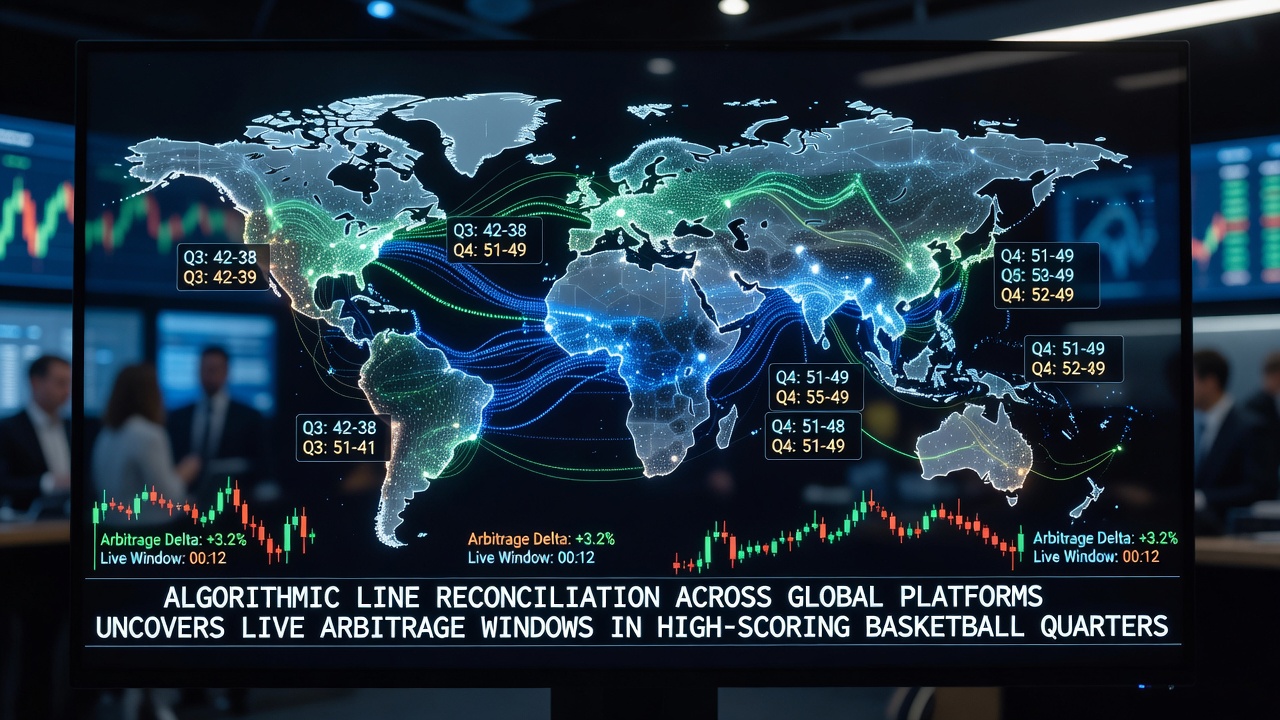 Data synchronization engines now operate across dozens of betting platforms to detect price differences that emerge when basketball teams enter periods of elevated scoring output. These systems pull live lines from operators in North America, Europe, and Asia then compare them in milliseconds to flag instances where implied probabilities diverge enough to support risk-free positions. Observers note that high-scoring quarters create the largest volume of such discrepancies because rapid point accumulation forces bookmakers to adjust totals and player props at uneven speeds. The process begins when an algorithm ingests fresh data feeds from multiple sources including league statistics providers and exchange markets. It then normalizes those feeds into a single reference frame that accounts for currency, margin structures, and settlement rules. Once normalized the engine scans for combinations where the sum of probabilities across correlated outcomes falls below 100 percent. Researchers at institutions studying sports analytics have documented that these windows appear most frequently in the second and third quarters when teams accelerate offensive pace after halftime adjustments. Platform operators in regulated markets such as those overseen by the Nevada Gaming Control Board release updated figures each quarter that illustrate how volume spikes correlate with reconciliation alerts. During July 2026 several major tournaments recorded elevated activity in live markets for teams averaging above 120 points per game. The same period saw increased participation from syndicates that deploy automated scripts to place offsetting wagers before lines converge.
Mechanics Behind Real-Time Line Matching
Reconciliation engines rely on application programming interfaces that deliver odds updates at sub-second intervals. When a high-scoring quarter begins the total points line moves first on exchanges while traditional sportsbooks lag by several seconds. The resulting gap allows the algorithm to lock in one side of a two-way or three-way market on one platform and the opposing side on another. Because the underlying event outcome remains identical across venues the positions offset each other once the quarter concludes.
High-scoring environments amplify these gaps because bookmakers must recalculate player performance props such as points, rebounds, and assists in addition to team totals. Each prop adjustment introduces a fresh opportunity for divergence. Data from academic studies on market efficiency indicates that the average duration of such windows ranges between four and eleven seconds during peak scoring stretches. Automated systems capture the majority of these intervals while manual traders rarely react quickly enough.
Regional Variations in Market Response
Operators based in different jurisdictions apply distinct risk-management thresholds. Markets regulated under frameworks similar to those in New Jersey and Ontario tend to widen spreads more aggressively during scoring runs. In contrast platforms operating under Australian wagering rules often tighten limits faster once volume thresholds are reached. These policy differences create additional layers of misalignment that reconciliation tools exploit systematically.

One study released by the University of Nevada examined over 12,000 quarters across two seasons and found that quarters exceeding 58 combined points generated 37 percent more reconciliation alerts than lower-output periods. The same research noted that the alerts clustered around specific time stamps such as the six-minute and two-minute marks when teams substitute high-usage players.
Impact of Data Latency and Feed Quality
Latency differences between data providers remain a primary driver of temporary edges. A feed from one league statistics partner may update player points two seconds ahead of a competing source. Algorithms that cross-reference multiple feeds can therefore identify the earliest movement and route orders accordingly. Industry reports compiled by the American Gaming Association show that operators investing in lower-latency infrastructure reduced their exposure to automated arbitrage by measurable margins during the 2025-2026 season.
Yet the same reports highlight that complete elimination of discrepancies proves difficult because external factors such as network congestion and exchange maintenance windows continue to introduce brief delays. Those delays become especially pronounced when multiple high-profile games occur simultaneously.
Future Developments in July 2026 and Beyond
During July 2026 several technology providers announced upgrades that incorporate machine-learning models trained on historical quarter-level scoring patterns. These models predict the likelihood of a reconciliation window forming once a team surpasses a defined points-per-minute threshold. Early deployments indicate improved precision in routing orders to the platforms most likely to lag. Regulatory filings from multiple jurisdictions confirm that such predictive capabilities fall within existing compliance frameworks provided operators maintain audit trails.
Conclusion
Algorithmic reconciliation across global platforms continues to surface live arbitrage windows tied to high-scoring basketball quarters. teh combination of rapid data ingestion, normalized comparison, and automated execution allows market participants to act within the narrow timeframes these discrepancies exist. Evidence from regulatory filings, academic analyses, and industry volume statistics demonstrates that such opportunities remain concentrated in periods of elevated offensive output. As synchronization technology advances the duration of each window may shorten further yet the underlying mechanics of line misalignment persist across jurisdictions and operators.