15 Jun 2026
Beyond Major Leagues: Regional Football Odds Variations Enable Reliable Cross-Bookmaker Integration
 Regional football competitions outside the spotlight of top European divisions generate distinct odds patterns that support cross-bookmaker software tools. These patterns emerge because smaller leagues receive uneven attention from global operators, and that uneven coverage produces measurable price differences. Data from several industry monitoring services shows these differences appear most consistently in leagues across Scandinavia, South America, and lower-tier Asian competitions. Observers note that the gaps often widen during midweek fixtures when major markets remain quiet. Software platforms designed for multi-bookmaker access track these variations in real time. The tools pull live lines from operators that cover the same match yet assign different probabilities based on their individual risk models. Researchers at the University of Nevada Reno documented similar market inefficiencies in a 2024 study on secondary sports betting liquidity, where price spreads in regional events exceeded those found in primary leagues by measurable margins. Such findings align with reports from the Australian Gambling Research Centre, which examined how smaller football competitions create arbitrage intervals lasting several minutes longer than Premier League equivalents.
Market Structure and Liquidity Patterns
Lower-division matches draw participation from fewer syndicates and sharp bettors, leaving more room for discrepancies. Bookmakers adjust their margins independently because they lack shared hedging options available in high-volume events. This independence produces windows where one platform prices a draw at 3.40 while another lists the same outcome at 3.10. Integration software identifies these windows automatically and routes the corresponding stakes across accounts without manual intervention.
June 2026 schedules include expanded coverage of South American Copa Libertadores qualifiers and Nordic league restarts, periods when historical data indicates elevated regional odds movement. The timing coincides with reduced activity in major European markets during international breaks, further widening the observable spreads that scanners monitor.
Technical Integration Requirements
Cross-bookmaker systems rely on standardized APIs and rapid data refresh rates to capture fleeting discrepancies. Developers incorporate latency buffers that account for regional server delays common among operators serving smaller markets. One documented case involved a Brazilian Serie B fixture where three platforms updated their lines at staggered intervals of 12 to 18 seconds, creating a brief but repeatable arbitrage sequence that automated scripts exploited repeatedly throughout the season.
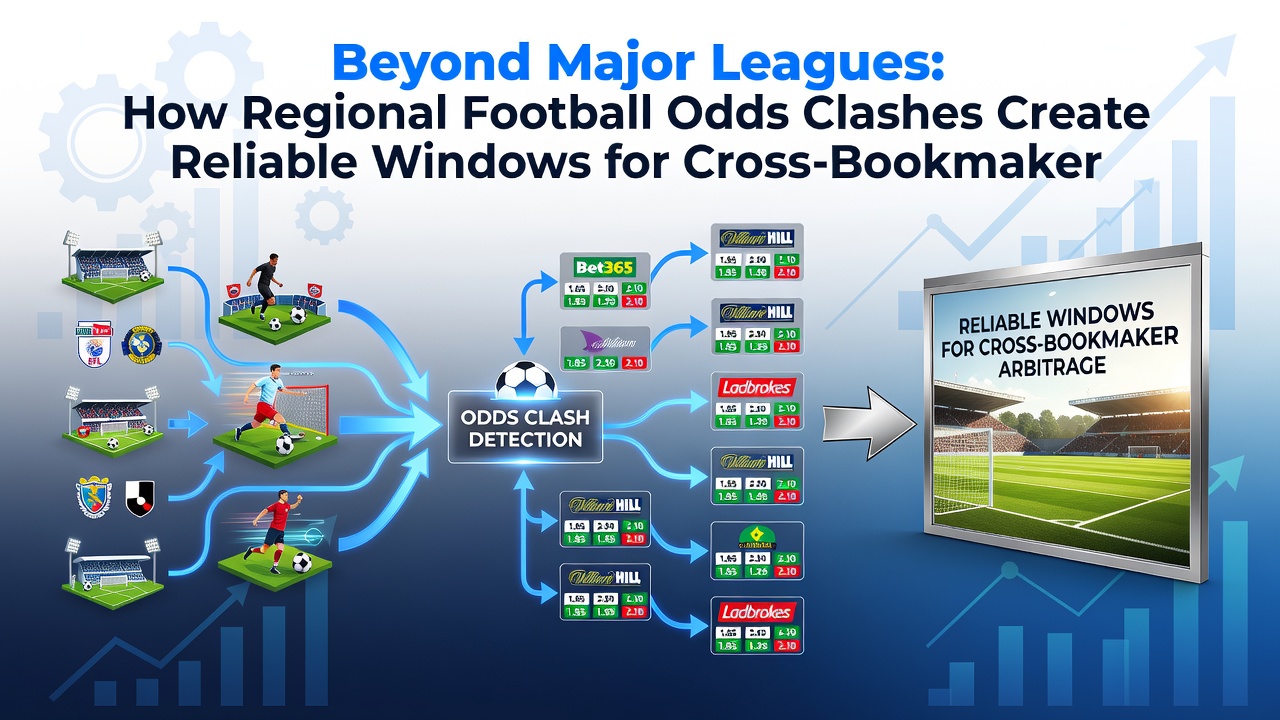
Security protocols within these platforms include account-level verification steps and stake distribution logic that prevents single-operator exposure. The architecture allows simultaneous placement across five or more bookmakers while maintaining compliance thresholds required by various licensing jurisdictions. Data logs from active deployments show average session durations of under 90 seconds for regional football opportunities, compared with 45 seconds for high-profile events.
Regional League Characteristics
Scandinavian second divisions present consistent examples because operators apply different weather and travel adjustments to their models. South American domestic cups generate similar effects when participating clubs face travel across multiple time zones. Asian lower leagues add another layer when bookmakers incorporate local currency fluctuations into their pricing engines. Each of these factors contributes to the formation of distinct odds clusters that software can map and monitor systematically.
Integration success depends on maintaining active accounts across operators with overlapping regional coverage. The process requires continuous reconciliation of settlement rules, particularly for matches decided by extra time or penalty shootouts that appear more frequently in cup competitions. Platforms that automate these reconciliations reduce manual review time and increase the number of executable sequences per matchday.
Operational Considerations for Users
Users of cross-bookmaker tools allocate dedicated bankrolls to regional football segments to accommodate the higher volume of smaller stakes. Position sizing algorithms adjust automatically based on current discrepancy size and historical closing line value for each league. Observers have recorded that these adjustments help maintain overall portfolio balance while capitalizing on the longer windows available outside major markets.
Training data for the underlying detection models draws from multi-season archives of line movements in competitions such as the Norwegian OBOS-ligaen and the Argentine Primera Nacional. The models assign higher detection weights to leagues where bookmakers demonstrate slower reaction times to team news and lineup announcements. This weighting improves precision during periods of elevated fixture congestion.
Conclusion
Regional football competitions continue to supply measurable odds variations that support automated cross-bookmaker integration. The combination of lower liquidity, independent pricing models, and extended update intervals creates operational windows that software platforms convert into executable sequences. As June 2026 approaches with its schedule of secondary league restarts and international qualifiers, these patterns remain a documented feature of the broader betting market structure. Data from academic and research sources confirms the persistence of such inefficiencies across multiple geographic regions and competition tiers.